Storms can wreak havoc on trees, causing damage that compromises safety and aesthetics. When faced with storm-damaged trees, it’s essential to prioritize safety, assess the extent of damage, and determine whether tree removal is necessary. Here’s a guide to restoring safety and aesthetics after storm damage. After the strong winds, our team was called to assess the storm’s aftermath, which included extensive tree and tree limb removal to clear the area and prevent further damage.
1. Prioritize Safety:
After a storm, prioritize safety by assessing potential hazards posed by damaged trees. Broken branches, leaning trees, and uprooted trunks can all pose risks to people and property.
2. Immediate Inspection:
Inspect your trees for visible signs of damage immediately after the storm passes. Look for broken branches, splits in the trunk, uprooted trees, and cracks in the main stem.
3. Call Professionals:
If you’re unsure about the extent of damage or the safety of a tree, consult with certified arborists or tree removal professionals. They can assess the situation and recommend the appropriate actions.
4. Assess Repairability:
Determine if damaged trees can be saved through pruning and other corrective measures. Some trees can recover with proper care, while others may require removal.
5. Safety First:
If a storm-damaged tree poses an imminent safety risk, prioritize its removal to prevent further damage or injury.
6. Partial Removal:
For trees with partial damage, consider selective pruning to remove broken branches and promote the tree’s recovery.
7. Complete Removal:
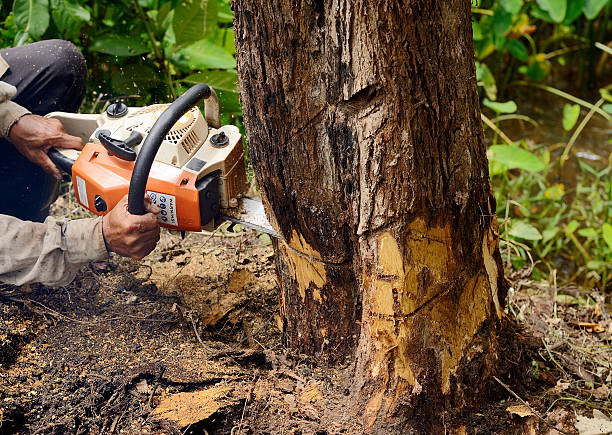
In cases of severe storm damage, where a tree’s structural integrity is compromised, complete removal may be necessary to ensure safety.
8. Maintain Aesthetics:
While safety is paramount, aesthetics also play a role. If a tree’s appearance is significantly altered due to damage, removal might be preferred for maintaining your property’s visual appeal.
9. Replacement Planting:
If removal is necessary, consider planting replacement trees that are more resilient to storms and local weather conditions.
10. Landscape Redesign:
Use the opportunity to redesign your landscape, considering the placement of trees, structures, and other elements to minimize future storm damage.
11. Prune for Prevention:
Regular tree maintenance, including proper pruning, can help prevent storm damage by reducing the risk of weak or overgrown branches.
12. Monitor for Disease:
After a storm, monitor trees for signs of disease or infection that might have been exacerbated by the damage.
13. Salvage Wood Responsibly:
If a tree is removed due to storm damage, repurpose salvaged wood for furniture, firewood, or other projects to minimize waste.
14. Learn from the Experience:
Use the storm damage as a learning experience. Identify trees that are more susceptible to damage and make informed decisions about future landscaping.
15. Emergency Preparedness:
Incorporate storm preparedness into your landscaping plans. Plant trees strategically and prune regularly to reduce the risk of storm-related damage.
In conclusion, storm damage can impact the safety and aesthetics of your property. While your priority is ensuring safety, it’s also essential to consider the visual impact of tree removal. Consult professionals for guidance, assess the extent of damage, and make informed decisions to restore safety and aesthetics to your outdoor space.